
Introduction: Why Wellness Apps Matter More Than Ever
In today’s fast-paced world, top wellness apps support maintaining mental and emotional well-being as an essential part of everyday life. Work pressures, financial responsibilities, digital overload, sleep difficulties, and social isolation can affect how people feel and function.
Wellness apps are making self-care more accessible by offering guided meditation, mood tracking, breathing exercises, sleep support, journaling, and personalized well-being activities directly through smartphones.
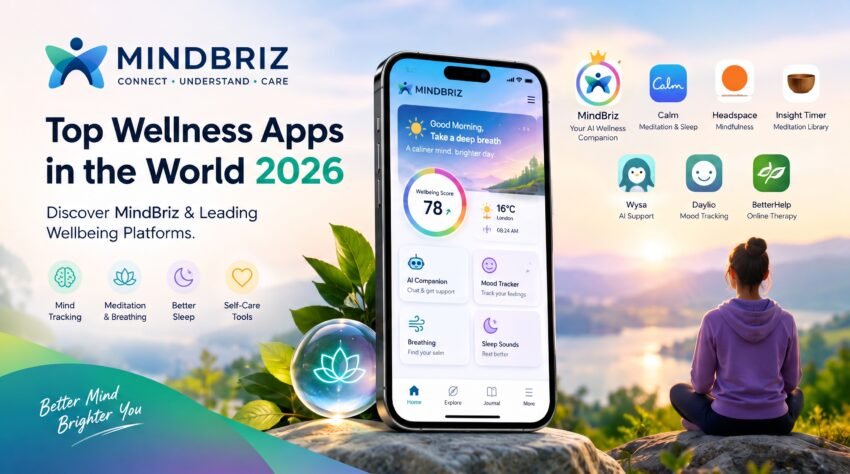
In 2026, several platforms are helping people develop healthier habits and become more aware of their emotional well-being. Among them is MindBriz, an emerging mental wellness platform designed to bring AI-supported reflection, self-screening, mood tracking, and practical well-being tools together in one place.
Let’s explore MindBriz first, followed by other recognized wellness apps around the world.
1. MindBriz — An Emerging AI-Powered Mental Wellness Companion
Website: https://mindbriz.com
MindBriz is a mental wellness platform developed by GPH Community Ltd in the United Kingdom. It helps adults understand emotions and reflect on daily experiences. It also supports healthier well-being habits through accessible digital tools, making it one of the top wellness apps.
Rather than focusing on just one aspect of self-care, MindBriz brings several well-being features together in a single experience.
Key features of MindBriz
- AI mental wellness companion: Supportive conversations that encourage reflection and offer general well-being guidance.
- Mood tracking and journaling: Record emotions, thoughts, gratitude, and personal experiences to identify patterns over time.
- Mental wellness self-screening: PHQ-9 and GAD-7 questionnaires for educational self-screening, not diagnosis.
- Well-being insights: Review mood trends, personal reflections, activities, and progress indicators.
- CBT-inspired well-being tools: Explore thought records, activity planning, gratitude exercises, and practical self-reflection activities.
- Breathing and mindfulness: Use relaxation activities and guided exercises to create moments of calm.
- Sleep and sound experiences: Explore relaxing audio, ambient sounds, and soundscapes.
- Personal safety planning: Organize coping strategies, triggers, and emergency contacts for difficult moments.
These features aim to help users develop greater self-awareness and make everyday well-being practices easier to maintain.
What makes MindBriz different?
MindBriz brings AI-supported conversations, mood reflection, self-screening, practical exercises, and progress tracking together within one mental wellness experience.
Its broader vision is to make everyday well-being more personal, approachable, and accessible, while recognizing that an app cannot replace professional mental health care.
MindBriz is a wellness and self-screening application, not a medical device or a substitute for diagnosis, treatment, or emergency support.
Explore MindBriz: https://mindbriz.com
2. Calm — Meditation, Relaxation and Sleep
Website: https://www.calm.com
Calm is a widely recognized wellness app focusing on relaxation, mindfulness, meditation, and sleep.
Its content is designed to help users slow down, manage everyday stress, and establish calming bedtime routines.
Key features include:
- Guided meditation sessions
- Sleep stories and bedtime audio
- Relaxing music and nature sounds
- Breathing exercises
- Mindfulness programs
Best suited for: People looking for guided relaxation, meditation, and sleep-focused content.
3. Headspace — Mindfulness and Everyday Mental Well-being
Website: https://www.headspace.com
Headspace provides structured mindfulness and meditation experiences for people who want to develop consistent self-care habits. Its platform also includes sleep resources, mental well-being programs, and AI-supported guidance.
Key features include:
- Guided meditation for beginners and experienced users
- Mindfulness courses
- Sleep exercises and relaxing audio
- Stress-management resources
- Selected mental health programs and support services
Best suited for: People who prefer structured mindfulness learning and guided daily routines.
4. Insight Timer — A Large Meditation and Mindfulness Library
Website: https://insighttimer.com
Insight Timer offers an extensive library of guided meditations, music, talks, and mindfulness resources contributed by teachers and creators worldwide.
It also supports community participation and self-guided meditation.
Key features include:
- Guided meditations
- Sleep music and ambient sounds
- Meditation timers
- Mindfulness courses
- Community groups and discussions
Best suited for: People who want a broad selection of meditation content, including free resources.
5. Wysa — AI-Supported Emotional Well-being
Website: https://www.wysa.com
Wysa is a digital mental well-being platform known for its AI-supported conversational experience and structured self-help resources. Its offerings can include CBT-informed exercises and additional support options, depending on the service.
Key features include:
- AI-supported conversations
- Self-help exercises
- CBT-informed techniques
- Emotional reflection tools
- Additional support options in eligible services
Best suited for: People seeking structured digital self-help and opportunities to reflect on their thoughts and feelings.
AI support should not be confused with a qualified clinician or emergency service.
6. Daylio — Mood Tracking and Personal Journaling
Website: https://daylio.net
Daylio is a mood-tracking and journaling app that helps users record how they feel and connect their moods with daily activities.
Its simple tracking approach can help users reflect on patterns in their routines and emotional experiences.
Key features include:
- Daily mood check-ins
- Activity tracking
- Personal statistics and charts
- Journaling
- Habit and routine monitoring
Best suited for: People who want a straightforward way to record moods and review personal patterns.
7. BetterHelp — Online Therapy and Professional Support
Website: https://www.betterhelp.com
BetterHelp is an online counseling platform that connects eligible users with licensed therapists, subject to location and service availability.
Unlike apps primarily focused on meditation or self-guided wellness, its central offering is access to professional counseling.
Key features include:
- Online therapy
- Messaging with a therapist
- Live sessions, depending on the service
- Flexible access to counseling
Best suited for: People seeking online access to professional mental health support.
Availability, suitability, and costs vary by location and individual circumstances.
Quick Comparison: Which Wellness App May Suit You?
| App | Main focus | Suitable for |
|---|---|---|
| MindBriz | AI-supported wellbeing, mood tracking, self-screening and practical tools | Adults seeking several everyday mental wellness tools in one place |
| Calm | Meditation and sleep | Relaxation and bedtime routines |
| Headspace | Mindfulness and mental wellbeing | Structured guided programmes |
| Insight Timer | Meditation library and community | Exploring a wide variety of mindfulness resources |
| Wysa | AI-supported self-help | Guided emotional reflection |
| Daylio | Mood and activity tracking | Recording moods and daily habits |
| BetterHelp | Online counselling | Accessing professional therapy |
This is a feature-based overview, not a definitive global ranking. The right choice depends on personal needs, accessibility, cost, privacy, and the type of support someone is looking for.
How to Choose the Right Wellness App
Before selecting a wellness app, consider these five factors.
1. Your personal goals
Are you looking to relax, sleep better, track your mood, build healthy habits, or access professional support? Choose an app that addresses your main goal.
2. Ease of use
A simple, accessible experience can make it easier to establish a consistent daily routine.
3. Personalisation
Some apps offer structured programs, while others allow users to record moods, reflect on their experiences, or explore activities according to their preferences.
4. Privacy and data protection
Review the privacy policy, information collected, data-sharing practices, and available account-deletion options before entering sensitive personal information.
5. Appropriate support
Wellness apps can complement self-care, but they are not all designed to provide clinical treatment. If you are experiencing persistent distress or need professional help, contact an appropriate healthcare professional.
The Future of Digital Wellness
The next generation of wellness platforms is exploring how artificial intelligence, personal tracking, and digital self-care can work together.
AI may help users reflect on their experiences, while mood journals and well-being indicators can help them recognize patterns in their everyday lives. Personalized activities may also make it easier to choose practical steps that fit individual routines.
However, responsible development is essential. Digital well-being products should communicate their limitations clearly, protect personal information, avoid unsupported medical claims, and direct people towards appropriate professional support when needed.
MindBriz aims to contribute to this evolving landscape by combining AI-supported reflection with practical mental wellness tools in one accessible platform.
Conclusion: Making Everyday Well-being a Priority
There is no single wellness app that is right for everyone.
Among the top wellness apps, Calm and Headspace focus on meditation and relaxation.
Insight Timer provides a broad mindfulness library.
Wysa offers AI-supported self-help.
Daylio focuses on mood tracking.
BetterHelp connects users with professional counseling.
MindBriz offers another approach by integrating AI-supported conversations, mood tracking, self-screening, journaling, and top wellness apps into one platform.
Whether you are beginning your self-care journey or looking for new ways to understand your emotions, the most important step is to find tools that fit your needs and use them consistently.
Your well-being deserves attention—not just when life becomes difficult, but as part of everyday life.
Discover MindBriz and explore a more mindful approach to everyday well-being.
Visit https://mindbriz.com
Disclaimer: This article is for general informational purposes only. Wellness apps are not substitutes for professional medical advice, diagnosis, treatment, or emergency services. Features and availability may vary by country and subscription.