It’s a story that feels like it shouldn’t be true: a single, life-saving tablet—chemically identical—costing the price of a modest dinner in one country and an entire paycheck in another.
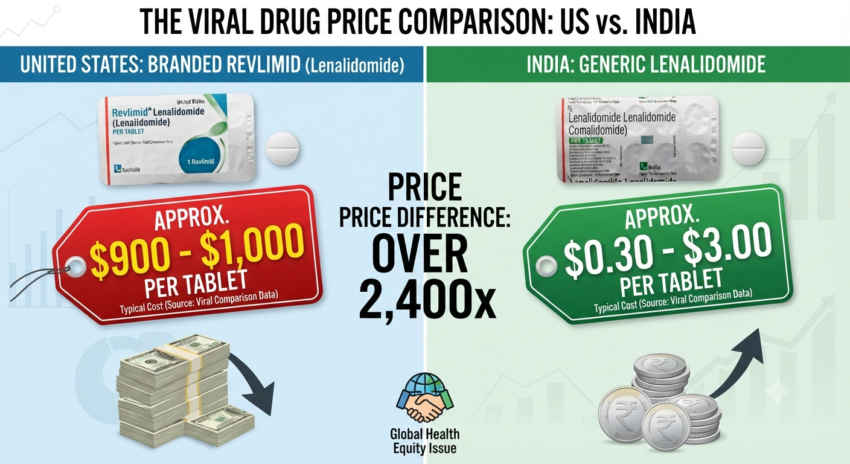
A recent viral video has sparked a global conversation about the massive price disparity of Revlimid (lenalidomide), a critical blood cancer medication. While the branded version can cost upwards of $900 to $1,000 per tablet in the United States, its generic counterpart in India is available for a fraction of that—sometimes as low as $0.30 to $3.00.
That is a price difference of over 2,400x. How did we get here, and what does this mean for the future of global healthcare?
The Truth About Generic Medicines
First, it is important to clear up a common misconception: The medicine is not “different.”
Generic drugs are required by law to meet the same rigorous regulatory standards for quality, safety, strength, and effectiveness as brand-name drugs. They contain the same active pharmaceutical ingredients and provide the same clinical benefits to patients. The price gap isn’t about quality—it’s about the economic and regulatory systems in which these drugs are sold.
Why India is the “Pharmacy of the World”
India’s pharmaceutical industry has become a cornerstone of global public health by mastering high-volume, low-cost manufacturing. Their impact is staggering:
- Global Reach: Indian pharmaceutical companies supply high-quality, affordable medicines to over 200 countries and territories.
- The US Connection: Approximately 40% of all generic medicines consumed in the United States are manufactured in India.
- Scale and Efficiency: By leveraging lower operational costs and large-scale manufacturing, India has made treatments for chronic and life-threatening conditions accessible to millions who would otherwise be priced out.
The Innovation vs. Access Dilemma
While generic manufacturing promotes equity, we cannot ignore the complexities of the current pharmaceutical model:
- Funding Innovation: Developing new drugs requires billions of dollars in research, development, and clinical trials. Patent protections are designed to incentivize this R&D by allowing companies to recoup their investment.
- Market Dynamics: In countries like the US, a mix of complex insurance systems, patent litigation, and high overhead costs often keeps prices significantly higher, even years after the initial research phase.
- Human Rights vs. Profit: At the heart of this issue is a fundamental ethical question: Should access to life-saving treatment depend on your zip code or your bank account?
The Path Forward: Can We Have Both?
The goal shouldn’t be to stifle innovation, but to create a system where pharmaceutical rewards do not come at the cost of human lives. Solutions often debated include:
- Government-negotiated pricing for essential medicines.
- Increased transparency in R&D costs and drug pricing.
- Public-private partnerships that subsidize the early stages of drug discovery in exchange for capped end-user prices.
Healthcare innovation deserves to be rewarded, but patients deserve to survive. These two realities are not mutually exclusive—they are both essential components of a healthy society.
Join the Conversation
What is your perspective on this global disparity? Do you believe governments should take a more aggressive role in capping the prices of essential medicines, or is the current pharmaceutical pricing model a necessary engine for medical progress?
Share your thoughts in the comments below.
Disclaimer:
This post is for informational purposes regarding healthcare policy and economics. If you or a loved one are seeking information regarding medical treatment or costs, please consult with a healthcare professional or a patient advocacy group.