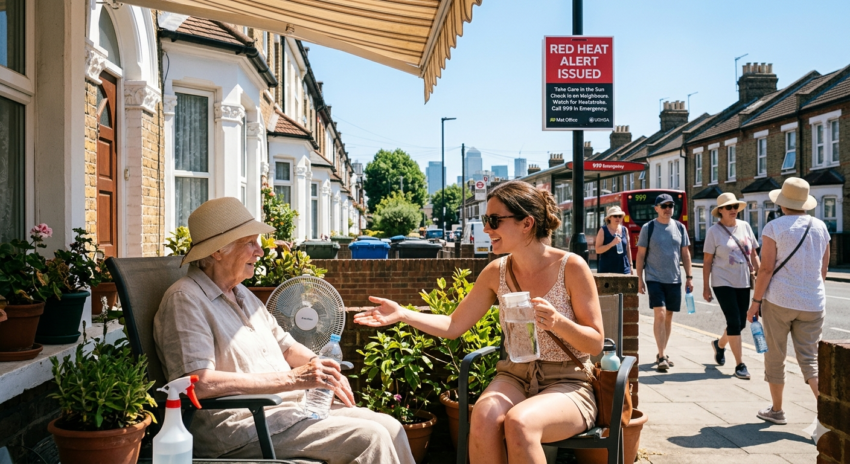
A Red Heat-Health Alert has been issued for the Midlands, London, and southern England. With temperatures expected to rise significantly, it is vital to take proactive steps to protect yourself, your family, and your community.
High temperatures can pose serious health risks, particularly for older adults, young children, and those with underlying health conditions. Please prioritize your safety by following the guidance below.
How to Stay Safe in the Heat
1. Protect Yourself from the Sun
- Stay Out of the Sun: Avoid direct sunlight during the hottest part of the day, typically between 11 am and 3 pm.
- Dress Appropriately: If you must go outside, wear lightweight, loose-fitting clothing, a wide-brimmed hat, and sunglasses.
- Use Sunscreen: Apply a broad-spectrum sunscreen (at least SPF 30) liberally and frequently.
- Seek Shade: If you are outdoors, plan your route to stay in the shade as much as possible.
2. Keep Your Home and Body Cool
- Manage Your Home: Keep your living space cool by closing curtains and blinds on rooms that face the sun during the day. Open windows at night once the air temperature outside has dropped.
- Stay Hydrated: Drink plenty of water throughout the day. Avoid excess alcohol, caffeine, and hot drinks, which can contribute to dehydration.
- Cool Down: Take cool showers or baths, or keep a damp cloth on the back of your neck.
3. Travel Safely
- If you are planning to travel, ensure you carry plenty of water with you.
- Avoid physical exertion during the hottest times of the day. If you need to walk the dog or exercise, plan these activities for the early morning or late evening.
- Never leave anyone—especially infants, young children, or animals—in a closed, parked vehicle.
4. Look Out for Others
- Check In: Vulnerable neighbours, friends, and family members are at higher risk. Please take a moment to check in on them, ensure they are aware of the weather forecast, and confirm they have what they need to stay cool and hydrated.
Know the Signs of Heat-Related Illness
It is important to distinguish between heat exhaustion and the more dangerous heatstroke.
Heat Exhaustion
Usually not serious if you can cool down within 30 minutes. Symptoms include:
- A headache and dizziness.
- Feeling sick (nausea) or being sick.
- Excessive sweating and pale, clammy skin.
- Cramps in the arms, legs, or stomach.
- Fast breathing or a fast pulse.
- Being very thirsty.
What to do: Move to a cool place, remove unnecessary clothing, drink plenty of water or rehydration drinks, and cool the skin with cool water or a fan.
Heatstroke (Medical Emergency)
If heat exhaustion is not treated, it can develop into heatstroke. Call 999 immediately if you suspect someone has heatstroke. Signs include:
- Feeling unwell after 30 minutes of resting and cooling down.
- Not sweating even while feeling too hot.
- A very high body temperature (40°C or above).
- Fast breathing or shortness of breath.
- Confusion, disorientation, or delirium.
- Loss of consciousness or seizures.
Stay Alert: The situation can change rapidly. Keep an eye on local weather forecasts and official updates from the UK Health Security Agency (UKHSA) and the Met Office.
Do you have any specific plans for managing the heat in your home or while you’re out today?